
ABOUT
When you touch the whole universe participate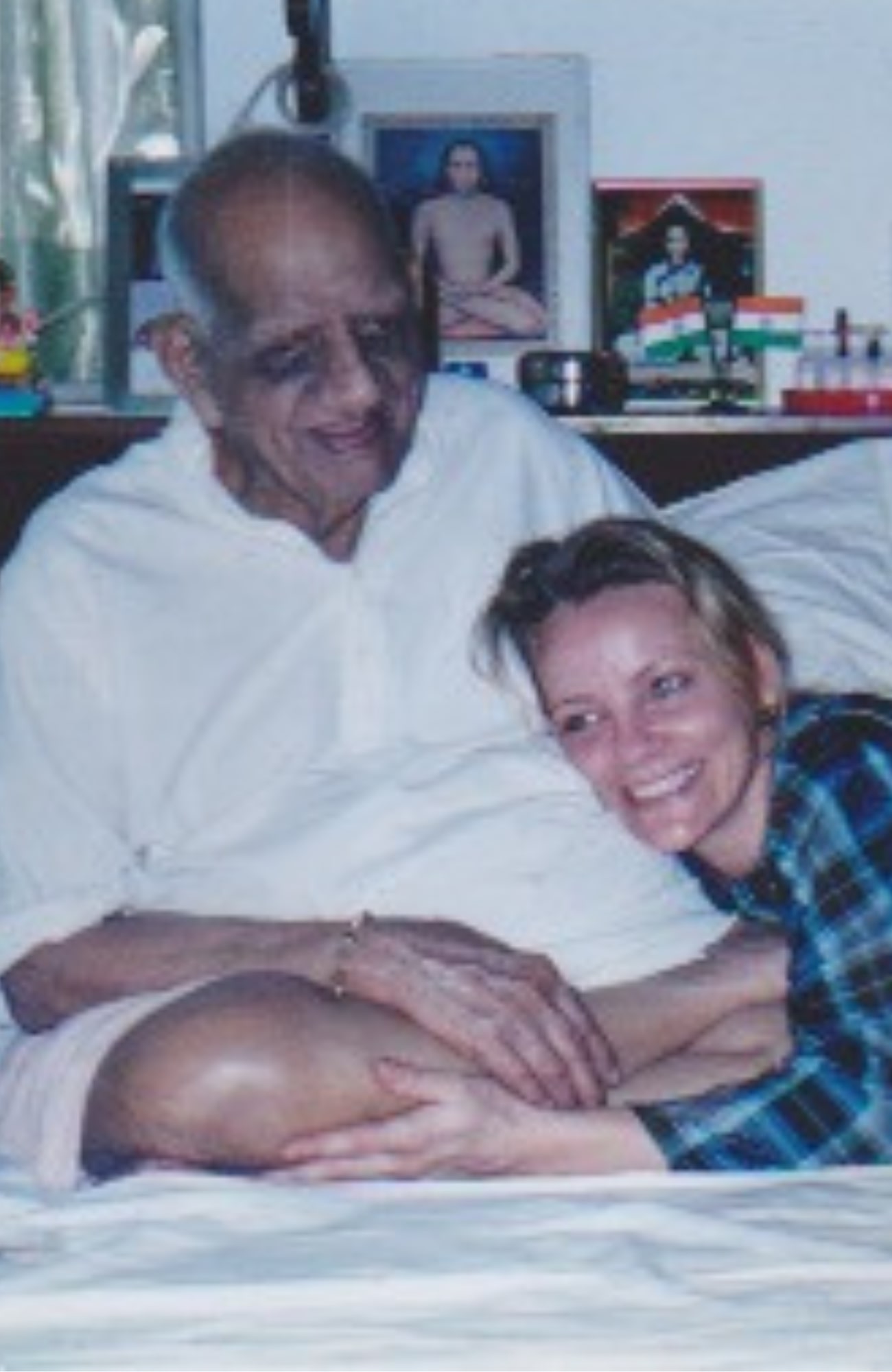
May Gurudev Parampuja – Dr. Ram Bhosle
Dr. Ram Bhosle was born into an eminent and wealthy family, but became an orphan at the age of 5. He was a trained kathak dancer, musician, and revolutionary who fought against the British colonial rule in India. He became a great and gifted healer both throughout the world and in India where he spent his first and last years of life.
For Dr. Bhosle ‘Every treatment is a prayer, a Sadhana towards Advait (cosmic oneness)’. Hence his gentle touch allowed many to experience a profound transformation, both physical and spiritual, as their bodies and souls awakened to a divine symphony of harmonious rhythm and vibration. Until the very last days of his life, he continued to offer his healing touch to his patients.
Dr. Ram Bhosle is the very embodiment of love and humility. His heart overflows with boundless affection, ever-present and unconditional to all he encounters. He welcomed his patients with grace, beauty, joy, and laughter, making each interaction an uplifting experience.
His healing was that of a true yogi – profound, gentle, and sacred. With quiet tears and divine silence, he brought comfort and peace.
His hands seemed to dance with light, caressing the body with a tenderness that not only soothed, but also awakened a sense of warmth and well being. It was as if his touch radiated the continuous energy of love itself.
Dear Ram Bhosle spent countless hours massaging his patients, sharing the extraordinary stories of his life. He spoke of his encounters with tigers, cobras in India, and rhinoceroses in Africa, where he learned the ancient art of healing with wooden sticks from the Maasai people. His healing journey led him to become the trusted masseur of figures as H.H. the 14th Dalai Lama, Winston Churchill, Marilyn Monroe, Yehudi Menuhin, Margot Fonteyn, Heinrich Harrer (author of Seven Years in Tibet), Jawaharlal Nehru (the Prime Minister of India), and even Mahatma Gandhi, whom he considered a dear friend.
Mahavatar Babaji and Bhagwan Nityananda, two of the great Indian saints and Avadhutas of the 20th century, were among those who deeply influenced him. These profound Sadhus and Yogis guided him through mystical experiences that were reflected in the purity and power of his healing touch. Ram also shared a special bond with Ramana Maharshi and other luminous souls, whose wisdom and presence further shaped his spiritual journey.
Living humbly and discreetly, Ram Bhosle’s later years were devoted to meditation and yoga, through which he cultivated a pure vibration of healing energy. Despite his international success and renown as a healer, both in India and around the world, Dr. Ram Bhosle always humbly attributed the results of his work to God.
After many years of traveling through Europe, America, Africa, and Asia, Ram Bhosle felt a deep calling to return to his homeland. There, he continued offering his healing hands to all who came to him, right up until the very last days of his life.
Dear Dr. Ram Bhosle passed away in February 2006.
*May Gurudev Parampuja
“Gurudev” means “venerable master,” an honorary title designating an enlightened being worthy of deep respect.
“Parampuja” refers to the act of offering homage to a spiritual teacher with deep reverence, like a heart’s salutation.
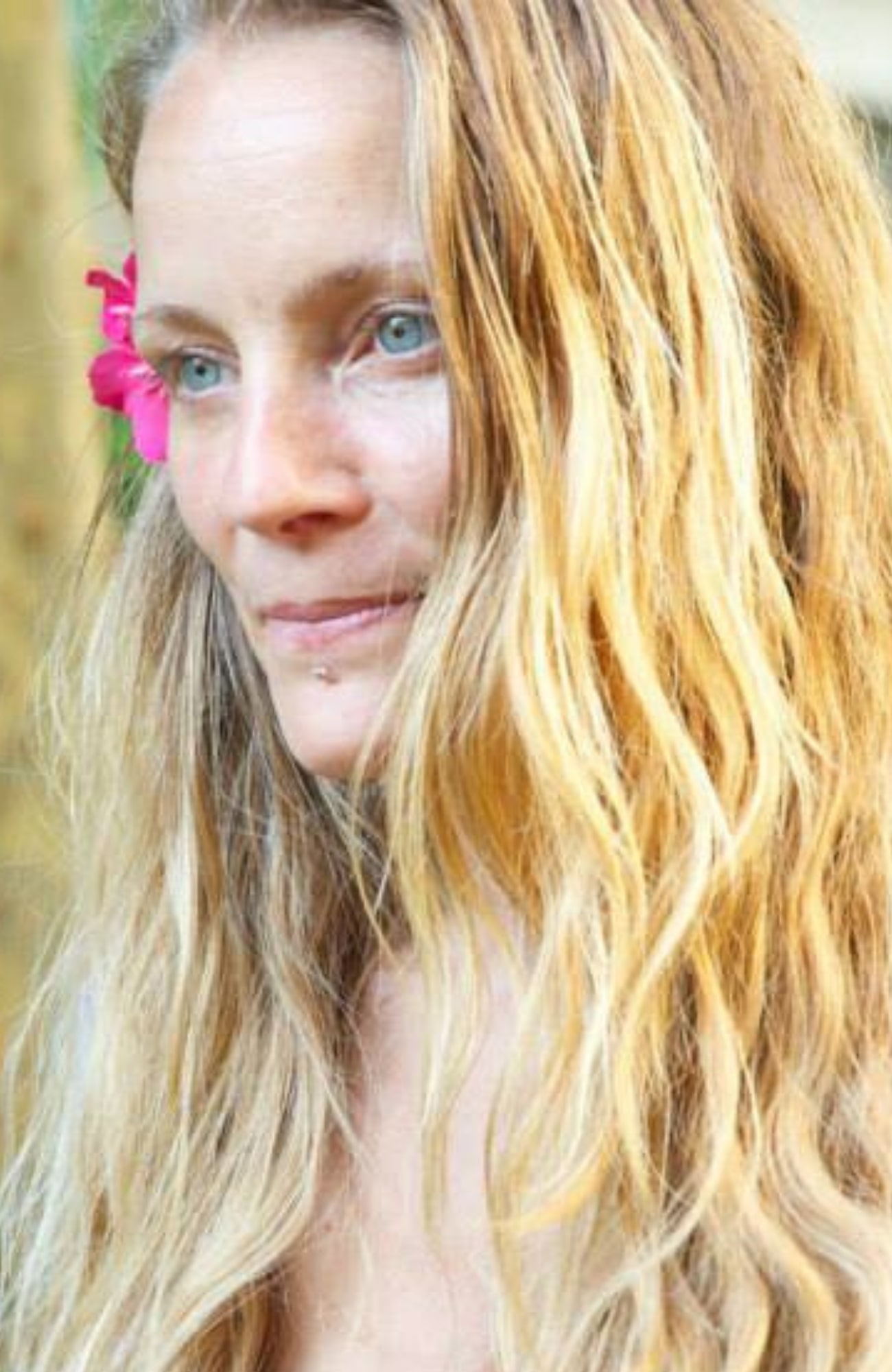
Jessica Neven du Mont
“I offer all my deepest gratitude and love to dear Ram Bhosle who allowed me to sit by his side during weeks year after year and this for several years. May I stay faithful to his dear teaching” Jessica Neven du Mont
For over twenty years, Samvahan massage has been an integral part of my life. It was in Mumbai, in the vibrant heat of this city, that I first met my beloved Guru, Râm Bhosle. It was in his apartment in Malabar Hill where he was living as the honored guest of the great Maharati Family close to Savita Didi that I met Ram for the first time.
Each encounter was a renewal, an immersion into the essence of Samvahan. Driven by the desire to deepen my awareness of this subtle and powerful practice, I returned regularly to meet with Râm for five years, until his passing. Beyond learning gestures and movements, he showed me or he taught me a form of silent communion, a heart-to-heart transmission, where each moment was experienced in a state of profound presence. Time seemed to stand still, and it was in this luminous rhythm and gentleness, that the true teachings revealed themselves.
The transmission took place in Ram’s room at Malabar Hill, while sitting by his side for several weeks, usually twice a year and this for over four years. The transmission often took place in silence, sometimes in a meditative state of “lucid stillness.” We would spend hours together, in a mutual presence that went beyond words. Sometimes, Ram would place his forehead against mine, or on my spine, or he would massage me. I would feel my body awaken as a resonant, vibrating, and luminous vessel right down to the core of my cells. This too was part of the transmission.
These moments together were imbued with calm and serenity, creating space for intuitive awareness. Through this unique and silent experience, I learned both to receive and to offer Samvahan. This practice is a true communion – a transmission and flow of energy and presence within a space of harmony and respect; it is Darshan*.
*Darshna (in Sanskrit दर्शन) translates as a ‘moment of spiritual communion’ through vision or an encounter.”
It can also be translated as ; “sacred sight” or “divine vision.” It refers to the experience of seeing or being seen by a holy person, such as a guru or deity, with the implication of receiving their blessings or spiritual insight.
Darshan is a life changing transmission; it is in that sacred sight that we receive a transmission.
Over time, Râm Bhosle asked me to pass on this ancient art, an honor both humbling and illuminating, which I dared to embrace through my devotion to Bhakti.*
*In Sanskrit, Bhakti means deep and total devotion, love, commitment, as well as authentic and sincere discipline.
For over fifteen years, I have been sharing Samvahan through multi-cycle training programs, transmitting this sacred knowledge with the same devotion and respect with which I received it.
Being an heir of Samvahan, as it was transmitted to me by my dear Guru Râm Bhosle, I transmit this ancient art globally.
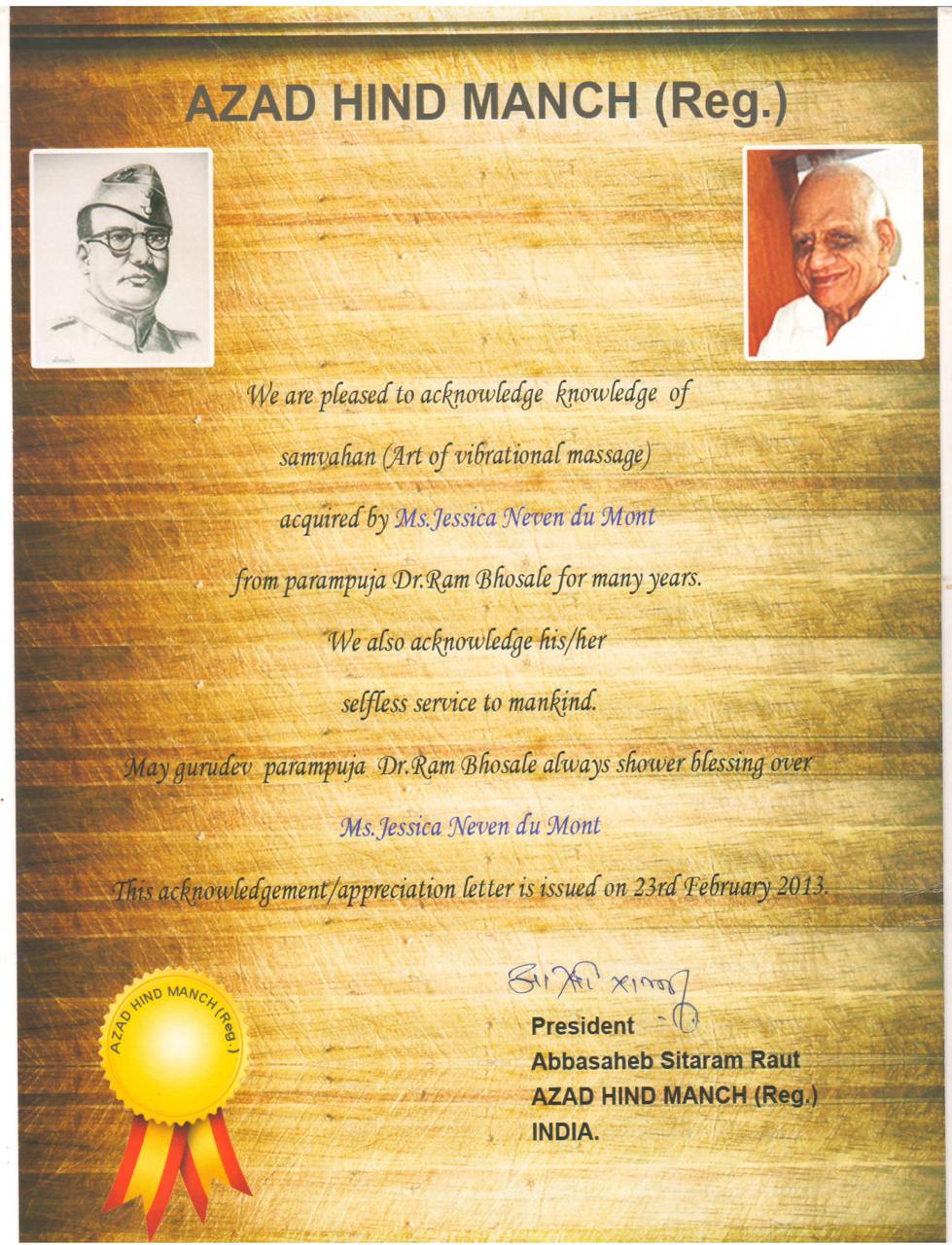
In 2013, the Indian Ministry of Health awarded me the title of Honorary Disciple of May Gurudev Parampuja* Dr. Râm Bhosle.
*May Gurudev Parampuja
“Gurudev” means “venerable master,” an honorary title designating an enlightened being worthy of deep respect.
“Parampuja” refers to the act of offering homage to a spiritual teacher with deep reverence, like a heart’s salutation.
Samvahan is acknowledged in India by the Ministry of Health as a vibrational massage stemming from the same traditional medicine as Ayurveda.
Thanks to Samvahan and practicing the art of listening to the body and its essence, I gradually became aware that it was within the body’s vibrating rhythms and its poetic intelligence that true understanding emerged. With Râm’s support, I learned to integrate this subtle language, dialogue, and communion of the organs and the human body. Over time, I began to feel the motion and flow within each person’s anatomy, transforming it into a living space of deep, vibrant resonance. At the outset of my training programs in 2005, it was through this approach that I came to name my work Anatomie Poétique (Poetic Anatomy).
I offer my experience as a reflexologist and massage therapist to support pregnant women, assist with childbirth preparation, and provide follow-up care for early childhood. My practice also extends to couples facing fertility challenges and people with serious medical conditions. I specialize in abdominal, foot, and hand massage as well as facial massage.
The newborn massage techniques I learned during my childhood in Mali and as a young mother in Senegal have inspired my dedication to the care of mothers and children. Since then, I’ve expanded my work to include postpartum care, childbirth preparation, and support throughout various life stages. Fathers are also encouraged to receive this subtle form of massage—both for themselves and to support their partners, whether as current or future parents. These experiences and relationships naturally led me to offer care for all individuals at the end of life until the soul fully withdraws from the physical body . l accompany inclusive all gender, situation … people who are deeply physically or mentally challenged ….
In addition to medical treatments, I offer attentive touch therapy, complementing the care provided by healthcare professionals. In some cases, I work in collaboration with therapists trained in Ayurveda,Traditional Chinese Medicine, and other traditional practices, as well as with gynecologists, obstetricians, midwives, osteopath, and physiotherapists, Cancer .
The well-being massages I practice in no way replace medical care or treatment.
Training and Transmission
My training programs are aimed at therapists, massage practitioners, midwives, doulas, nurses, osteopaths, as well as anyone wishing to enrich their practice. Some of my courses are also accessible to individuals who wish to discover a subtle and creative well-being massage, offering profound relief for use within the family and within all genders.
Code of Ethics
The Practitioner’s Code of Ethics
This charter provides a framework for the practice proposed by Jessica Neven du Mont. It must also be respected by all those who receive a diploma following Jessica’s training / course . Compliance with this charter is one of the obligations that allows them to practice in a professional setting.
Engagement with the public
CODE OF CONDUCTS: In accordance with the law of 30 April 1946, decree n°60665 of 4 July 1960, article L489 of the Public Health Code and decree n°96 – 879 of 8 October 1996, this is not about medical massage or masso-kinesitherapy but about well-being techniques.
Samvahan is recognized in India by the Ministry of Health as a vibratory massage derived from the same medicine as traditional Ayurvedic medicine. Jessica Neven du Mont has been recognized by the Ministry of Health in India as an honorary student (disciple) of her master Dr. Râm Bhosle
To bring a “right” touch – a benevolent****** and well-treated***** touch is also to offer at best a posture, an attitude supported by an ethic: The charter will be able to allow an inner reflection, an adjustment and a questioning supported by the fact of “putting oneself at the service of the other” by offering our humanity, our light, the beauty in us… it requires to dare to cross the dark part in us. In this clarity, this neutral place, in this crucible we can be at the service of the other, accompany him, and thus be a support point for him. And the practitioner, thanks to this inner balance, can free himself from a right touch where in the present and through touch he has the courage to inhabit this space allowing him to “perceive the dark as well as the luminous part of the other. Thus the practitioner who dares to cross the light is not reached by the darkness of the place. There emerges a just possible touch, the one who hears and sees the history of the place without grasping it or rejecting it! (in part of this paragraph I was inspired by a text by C Michel-Schweitzer)
1. Professional secrecy
– Respect and preserve privacy and guarantee strict confidentiality.
The practitioner hides the identity of the patient when using information about him or her, otherwise the practitioner must not disseminate or use the patient’s confidential information.
– Except in the case of a minor or a person with a legal representative, when the practitioner intervenes with a couple or family, the right of professional secrecy of each member of the couple or family must be protected.
2. Welcome, present the healing sessions
– Listen to the patient to ensure his or her well-being and work wit / fit to his rhythm.
– Do not impose our vision of touch and/or massage to the patient.
– “ The practitioner does not know for the other, does not speak for the other, does not explain to him who he is, what he should be doing, what he should be saying : The practitioner (therapist) does not have to want for the other, has no desire to know about the other. If we know with the other, we know nothing for the other’: Recognition is first over knowledge. C. Michel-Schweitzer
“It is by occupying our own place that we can invite the other to do the same: To inhabit our space, our place by the mere presence”
“Each of us can receive the other’s share of mystery without spreading its secret” René Char
“On what we can not talk about, we have to keep quiet” Ludwig Wittgenstein
He who knows does not speak
He who speaks does not know
Knowing and thinking that you don’t know is excellence.
Not knowing and thinking that you know is disease.
It is only by recognizing the disease as a disease
that we exempt ourselves from the disease. Lao-Tseu Tao Te King
– The practitioner is encouraged to clearly explain to the person the situation in which the massage will be performed and the technique used. The practitioner recognizes the limits of his or her skills and refers to a medical or paramedical professional if necessary.
– Accept the person as he or she is, without judging his or her social environment, respect political, religious or philosophical beliefs, exclude all forms of proselytism: refrain from devaluing or enhancing the patient by differences such as culture, ethnicity, colour, race, sex, religion, marital status, sexual tendencies, mental or physical abilities, age, socio-economic status and/or any other personal preference or characteristic, condition or status.
– The practitioner may refuse to give a massage if he or she feels that the person is behaving in a disrespectful, inappropriate or ambiguous manner.
– Take into account and respect the person’s freedom of choice and decision.
3. To be informed, to get informed
– The practitioner is obliged to ask the person for information related to his or her state of health and medical history (operations, pregnancy, serious pathology, medical treatment, heart problem, tumor, cancer, phlebitis and/or thrombosis, gynecological situation). In some cases, according to counter-indications, care may be refused (examples: fever, illness, special medical treatment and in some cases: pregnancy, dermatological problem, following an operation, etc….)
** you can have the person complete a questionnaire to check his or her state of health and for optimal massage practice. The questionnaire allows the practitioner to choose not to perform certain procedures that may not be appropriate given the person’s state of health.
– Identify, take into account and respect any expression of pain or difficulty of the person.
– During a group session, the practitioner anticipates and commits the participants to respect the private and confidential nature of the information, in the event that any aspect of the private life of any of them is exposed during this session.
4. Compliance with the framework
– The person being massaged is the sole author of his or her healing. The practitioner is at his service through his posture as a “Witness” and by “Recognizing” his client/person in all aspects of his “being”. The practitioner should allow the person to appropriate his history, his symptom, his desire to make disappear the symptoms he has entrusted to us is made possible by a posture that leaves space between the patient and himself. In this neutral space, in this crucible, any transformation can take place without it rubbing off and affecting the other, locking him in. Both the person and the practitioner can thus make this path of encounter by touching it without attributing a healing result to the person.
– An obligation to keep one’s place, whatever the emotions that appear, by simply being there, present, at the service of the person and offering him/her the confidence to accompany him/her respectfully.
– Respect the rules of hygiene: personal, clothing and any equipment used. Ensure that the person is not allergic to the massage oils used.
– Exercise one’s profession with respect and dignity of the person, and adopt a respectful and adapted language and attitude.
– Respect the person’s right to modesty by conforming to the standards of decency both in practice and when undressing and dressing the person. The practitioner may under no circumstances require or induce the person’s nudity.
– The practitioner may under no circumstances massage under the influence of a substance that may produce intoxication, impairment, disturbance of faculties, or unconsciousness.
– Do not make a medical diagnosis of the person’s condition.
– Be honest in any representation, advertising or other approach regarding your profession and field of application as well as your field of competence. The practitioner must not claim any misrepresentation of his or her skills.
5. Concerning minors (adolescents, children and early childhood project)
– Beforehand, make sure that the minor personally expresses the wish to be massaged.
– Ensure that he/she has a state of health that authorizes the massage by the practitioner
– Never massage a minor without the presence of his parents and/or a legal guardian (guardian…), unless authorized in writing by the parents or guardian. The agreement of the parents to massage a child is mandatory.
– Respect the child’s free will and willingness to participate or not in the massage.
– Be caring**** and caring***** for the child. Welcome, accompany, support and encourage the Child: listen and ensure his well-being and respect his rhythm.
– Exercise your profession with respect for the dignity of the child and thus adopt a respectful and adapted language and attitude.
– In the case of an intervention with a structure such as a school, nursery, kindergarten, maternity: do not massage a minor without the presence of the representative(s) accompanying the child and/or children that are part of the intervention: unless the parents’ agreement has been sign
6. Responsibility
The practitioners have read in the appendix the “Charter of the rights and freedoms of the person (the patient) received” of 2003, based on the code of social action and families as well as the chapter “patient’s right” based on the code of public health 2010.
As a therapist or practitioner: You are in charge because “as Lacan observed, about the transferential relationship, that we love the one who knows and a fortiori, the one who can or at least claims it… The transfer lies in this attraction for the supposed knowledge of the practitioner and the capacities that result from it… The disoriented patient perceives himself on the contrary as knowing nor being able to do nothing… or if little. “Pierre Willequet
I ask you to be concerned about this reality because many excesses have occured and I am obliged to clearly specify that:
As a practitioner, we must not impose or play with overwhelming affectivity or sexual desire on anyone whoever is the source of it; this is obviously an abuse. In this case, the practitioner must leave his place as a therapist by openly explaining the reasons for this choice and thus making the two actors in the relationship free.
***I therefore invite you get information yourself and acquire a minimum of knowledge about relationship and this notion/ idea of transfer.
– In the course of his activity, the practitioner must under no circumstances accept or initiate an intimate relationship with the patient or any behaviour that would go beyond a therapeutic framework.
We believe that the above rules of conduct are comprehensive and provide a framework of benevolent and caring ethical value to provide quality interventions.
testimonials
"I unreservedly recommend both Jessica's teaching and care, very respectful of everyone, in total benevolence towards what is."
Serge Mang - France 2018
"After a few minutes of massage, I said to myself : this is the kind of reflexology I want to practice. Reflexology that's much broader and richer, more enveloping, than what I'd encountered before. Since then, I've signed up for all the training courses Jessica has offered, and have followed them with ever-renewed happiness."
Marion Beaune - France 2015
“A Samvahan massage session with Jessica is always a gift to me. First of all, I feel deep relaxation in my body, the well-being when the tensions disappear, even the most subtle ones of which I was not aware. And then it's as if LIFE is moving again. A soft, luminous pulse starts beating, bringing energy and presence where there was only tension and stress before.
The subtle touch and listening of her hands is a miracle!"
Lara Mang-Joubert - France 2018
"Through poetic images, she makes accessible a subtle teaching and a conception of the body far removed from our way of thinking. She knows how to put us in touch with the sacred in ourselves and in others, to teach us presence, patience, humility and trust, a know-how that can irrigate and illuminate any activity."
Perrine - France 2015
"Samvahan is an art of healing which I feel is in connection with my progress and personal fulfillment. Samvahan helps in one's process of healing, in one's personal development, is this not wonderful!
Every time I have taken a course with Jessica it transformed me, sometimes this has been painful!
During weeks I am taken by a feeling of joy and this joy is passed on to all my surroundings, I encounter laughter and beautiful connections during these phases! Thank you for these nice moments.
Jessica's teaching is different from all that I have followed. She allows us to be creative. Each ones massage becomes unique while Jessica follows the transmission she received from Dr Bhosle
Love circulates in her training and we feel at ease, without stress."
Aliya Baud - France 2014
Join Our Newsletter
Stay connected & subscribe for updates
By using this form you authorize the processing of your personal data.
More information here about our privacy policy.
Contact Us
If you have any questions you can use this form, it will be our pleasure to answer.
By using this form you authorize the processing of your personal data. More information here about our privacy policy.